 XIA LEI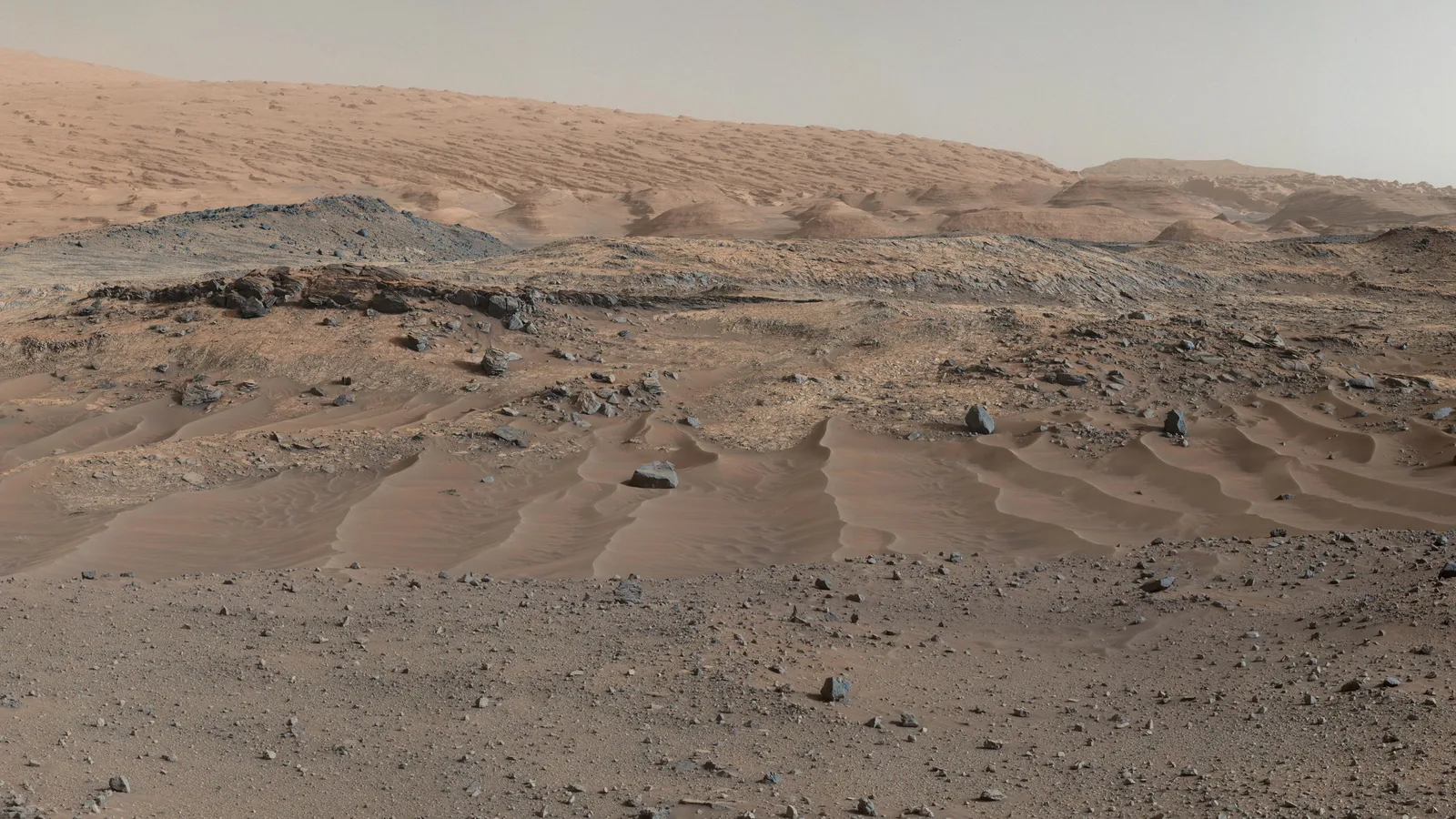
Getting there is the easy part
People often talk about going to Mars as if the hard part is the journey. It is not. Rockets have been flinging spacecraft at Mars since the 1960s, and the route is well understood. The two truly difficult problems are the ones at the end of the trip: stopping once you arrive, and staying alive once you have stopped.
This article walks through both, step by step, using what real missions have taught us so far. No science fiction required. The physics is already demanding enough.
Know your destination
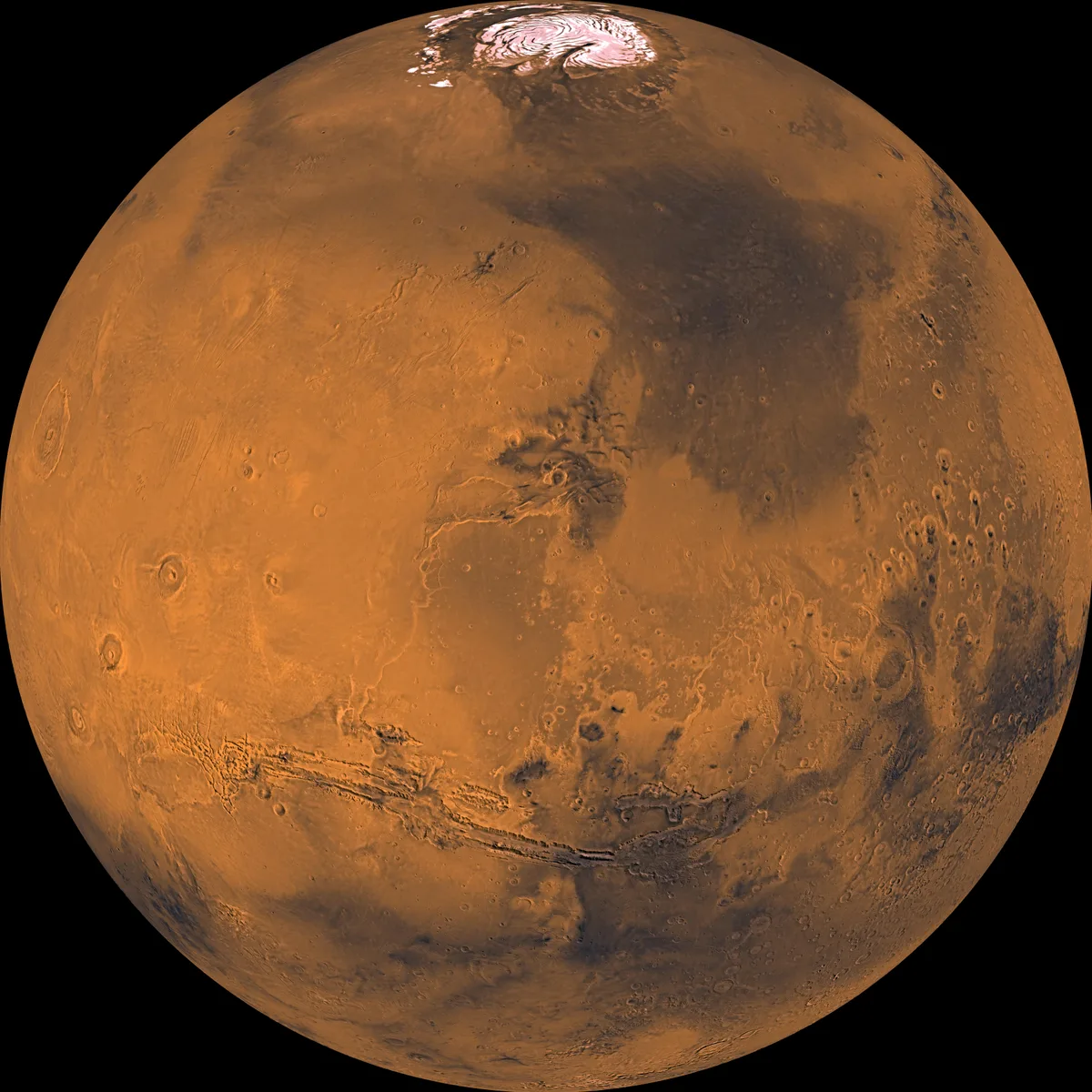
Before planning a landing, it helps to understand how strange Mars really is compared with home.
| Earth | Mars | |
|---|---|---|
| Gravity | 1 g | 0.38 g |
| Air pressure at the surface | 101 kPa | about 0.6 kPa (less than 1% of Earth) |
| Air mostly made of | Nitrogen and oxygen | About 95% carbon dioxide |
| Average temperature | About 15 °C | About −60 °C |
| Length of a day | 24 h | 24 h 39 min (called a "sol") |
| Sunlight strength | 100% | About 43% |
| Protective magnetic field | Yes | No global field |
| One-way radio delay to Earth | none | 3 to 22 minutes |
Two numbers in that table shape almost every decision that follows. The air is thin enough that it barely helps you slow down, yet thick enough to cook a spacecraft that hits it too fast. And there is no magnetic field or thick atmosphere to block radiation from the Sun and deep space.
Step 1: Leave at the right time
Earth and Mars line up favourably only about once every 26 months. Launch inside that window and the trip takes roughly six to nine months on an efficient path. Miss it and you wait more than two years for the next one.
That timing also controls the return. A typical "conjunction-class" mission spends around 500 days on the surface, waiting for the planets to line up again, so a full round trip lasts about two and a half years. Any crew going to Mars is not visiting. They are moving there for a while.
Step 2: Survive the seven minutes of terror
Engineers call the landing sequence "seven minutes of terror" for a good reason. A spacecraft arrives at around 20,000 km/h, and because radio signals take several minutes to reach Earth, the whole landing is over before mission control even hears that it started. Everything must happen automatically.
For the Perseverance rover in 2021, the sequence looked like this:
- Atmospheric entry. A heat shield faces forward and takes temperatures of around 1,300 °C as friction with the thin air sheds most of the speed.
- Supersonic parachute. At roughly 1,500 km/h, a parachute about 21 metres wide opens. Even this giant parachute only slows the craft to around 300 km/h, because the air is so thin.
- Heat shield drop and radar lock. The shield falls away, radar measures the altitude, and cameras compare the ground below with onboard maps to steer away from hazards.
- Powered descent. Rocket engines take over for the final stretch.
- Sky crane. A hovering rocket stage lowers the rover on cables, sets it gently on its wheels, then flies away to crash at a safe distance.
Why humans need a different approach
Perseverance weighs about one tonne. A lander carrying people, their habitat and their return fuel would weigh tens of tonnes. Parachutes simply do not scale that far in such thin air. The leading ideas for heavy landers are:
- Supersonic retropropulsion: firing rocket engines into the oncoming air while still travelling faster than sound. This is the approach planned for large vehicles such as SpaceX's Starship.
- Inflatable heat shields: huge, lightweight shields that unfold before entry to create far more drag. NASA tested one called LOFTID in 2022.
- Precise landing: heavy cargo landers must touch down close to each other, so supplies, habitats and fuel plants can be connected.
Choosing where to land
A good landing site is a compromise:
- Low ground, so there is more atmosphere above you to help with braking.
- Flat and boulder-free, so the lander does not tip over.
- Close to water ice, ideally buried just under the surface in the mid-latitudes.
- Not too far from the equator, for warmer temperatures and stronger sunlight.
Step 3: Get inside, fast
Once you are down, the environment immediately becomes the main threat.
Pressure
Mars's surface pressure is far below what scientists call the Armstrong limit, the point at which water in the human body would boil at body temperature. Unprotected exposure would cause unconsciousness within seconds. Every moment outside must be spent in a pressure suit, and every living space must be a sealed, pressurised habitat.
Cold
Temperatures near the equator can reach about 20 °C at noon in summer, then drop below −70 °C at night. Habitats need serious insulation and constant heating, and equipment must be designed to survive huge daily temperature swings.
Radiation
This is the slow, invisible danger. The Curiosity rover measured about 0.64 millisieverts per day on the surface, roughly the same as a year of natural background radiation on Earth every few months. A full mission could add up to around one sievert of exposure, near or above the lifetime limit many space agencies set for astronauts.
The best defence is mass between you and the sky:
- Bury the habitat under a few metres of Martian soil.
- Build inside natural shelters such as lava tubes or the base of cliffs.
- Use water as shielding, by storing it in the walls of sleeping quarters.
- Shelter during solar storms in a small, heavily shielded room.
Dust
Martian dust is extremely fine, sticks to everything and contains toxic chemicals called perchlorates. Inside a habitat it can damage lungs and wear out seals. Many designs use suitports, where the spacesuit stays docked on the outside wall and the astronaut climbs in through a hatch in its back, so the dusty suit never comes indoors.
Step 4: Make what you need from Mars itself
Shipping every litre of water and every breath of oxygen from Earth would be impossibly expensive. The long-term answer is called in-situ resource utilisation: living off the land.
Air
The Martian atmosphere is mostly carbon dioxide, and carbon dioxide contains oxygen. The MOXIE experiment aboard Perseverance proved the idea works, producing up to about 12 grams of breathable oxygen per hour and 122 grams in total. A human base would need a version hundreds of times larger, but the principle is now demonstrated on Mars.
Water
Satellites and the Phoenix lander have confirmed large amounts of water ice under the surface. Heating ice-rich soil releases water, which can be filtered for drinking, recycled through the habitat, and split into hydrogen and oxygen.
Fuel for the trip home
Combining Martian carbon dioxide with hydrogen produces methane and water, through a process known as the Sabatier reaction. Methane plus oxygen is exactly the fuel that modern Mars rocket designs plan to burn. In other words, astronauts could fill the tank for the journey home using the air around them.
Food
Martian soil is rich in minerals but contaminated with perchlorates, so it would need washing before use. Early crews would most likely rely on stored food plus fresh greens grown in hydroponic greenhouses, where plants grow in nutrient-rich water under LED lights rather than in soil. Leafy vegetables, potatoes, beans and dwarf wheat are common candidates.
Step 5: Keep the lights on
Sunlight on Mars is less than half as strong as on Earth, and planet-wide dust storms can blot out the Sun for weeks. The Opportunity rover fell silent in 2018 after a global dust storm covered its solar panels.
A safe base would combine:
- Large solar arrays with batteries for normal days.
- Small nuclear fission reactors, like the ones NASA tested under the Kilopower project, providing steady power day and night, storm or no storm.
- Strict energy budgets, because oxygen, water, heat and food all depend on electricity.
Step 6: Stay healthy and sane
The body and mind face challenges that no previous explorer has met.
- Low gravity. At 38% of Earth's gravity, muscles and bones weaken over time. Daily exercise and careful nutrition are essential, and no one yet knows exactly how the body adapts to Mars gravity over years.
- Medical self-reliance. With help months away, crews need advanced medical training, onboard diagnostics and the ability to handle surgery and emergencies themselves.
- Isolation and delay. Every message to Earth takes up to 22 minutes each way, so real-time conversation is impossible. Roughly every 26 months, the Sun passes between Earth and Mars and blocks communication for about two weeks.
- Living in a small group. Crew selection, privacy, routines and meaningful work matter just as much as life support. Analogue missions in Antarctica and sealed habitats on Earth show that small tensions can grow quickly in confined spaces.
A day in the life of a Mars settler
Put it all together and an ordinary sol might look like this:
- Wake up in a sleeping pod lined with water tanks for radiation shielding.
- Check the oxygen plant, water recycler and reactor output before breakfast.
- Harvest lettuce and herbs from the hydroponic farm.
- Climb into a docked suit through a suitport and spend a few hours outside servicing solar panels or collecting ice-rich soil.
- Return before the evening temperature crash, send recorded messages home and wait patiently for the replies.
- Exercise for two hours to protect bones and muscles.
- Watch a blue sunset, because Martian dust scatters light the opposite way to Earth's air.
The bottom line
Landing on Mars means braking from 20,000 km/h through air too thin to help much, with no chance of help from Earth during the descent. Surviving there means bringing your own pressure, warmth and radiation shielding, then learning to make air, water, food and fuel from the planet itself.
None of these steps is impossible. Every one has already been tested in some form, by rovers, landers or experiments on Earth. The challenge is doing all of them together, reliably, for years at a time. That is the real frontier: not just reaching Mars, but making it a place where people can stay.
Want to see where Mars is right now? Open the live solar system map and watch it move around the Sun.