 XIA LEI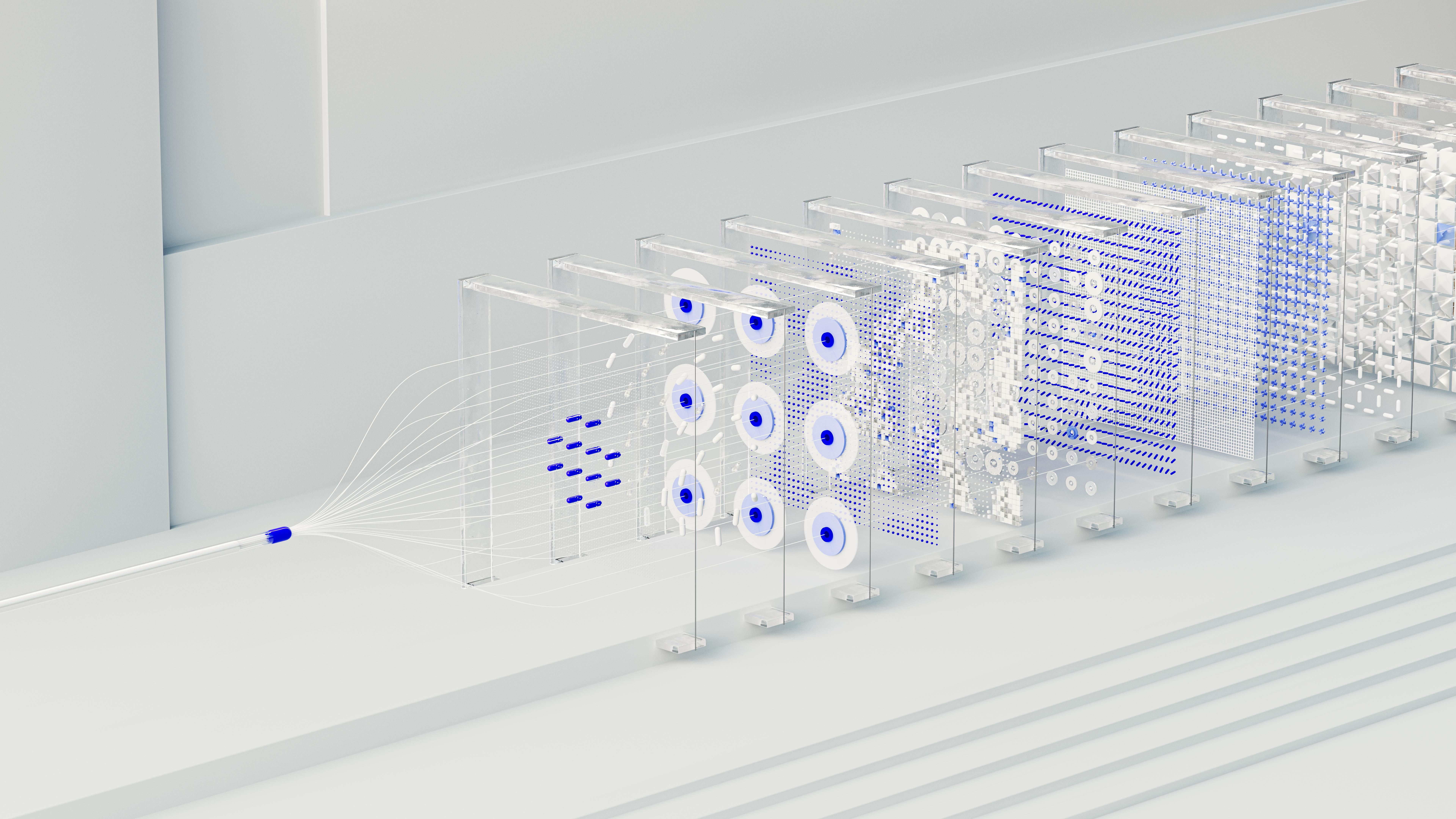
Self-Attention Mechanism: Complete Learning Guide
Introduction
Self-attention is the core mechanism that powers modern Transformer architectures and Large Language Models. This guide will take you from zero to mastery.
What is Self-Attention?
Self-attention allows each word in a sequence to attend to all other words, creating rich contextual representations. The mechanism computes:
- Query (Q): What information am I looking for?
- Key (K): What information do I contain?
- Value (V): What information do I actually pass along?
Mathematical Foundation
The self-attention formula is:
Attention(Q, K, V) = softmax(QK^T / √d_k)VWhere:
- Q, K, V are the Query, Key, and Value matrices
- d_k is the dimension of the key vectors
- The division by √d_k stabilizes gradients
How It Works
- Linear Projections: Input embeddings are projected into Q, K, V spaces
- Attention Scores: Compute similarity between queries and keys
- Softmax Normalization: Convert scores to probabilities
- Weighted Sum: Multiply attention weights by values
Multi-Head Attention
Instead of single attention, we use multiple attention heads in parallel:
MultiHead(Q, K, V) = Concat(head_1, ..., head_h)W^OEach head learns different relationships:
- Head 1: Syntactic dependencies
- Head 2: Semantic relationships
- Head 3: Long-range dependencies
Practical Applications
Self-attention is used in:
- Language translation
- Text generation
- Question answering
- Code completion
- Image understanding
Key Advantages
- Parallelization: Unlike RNNs, can process entire sequence at once
- Long-range Dependencies: Direct connections between all positions
- Interpretability: Attention weights show what the model focuses on
Learn More
Explore our interactive 3D visualization to see self-attention in action!