 XIA LEI
Orbits the Sun
Yes. It follows its own 283-year path around the Sun.
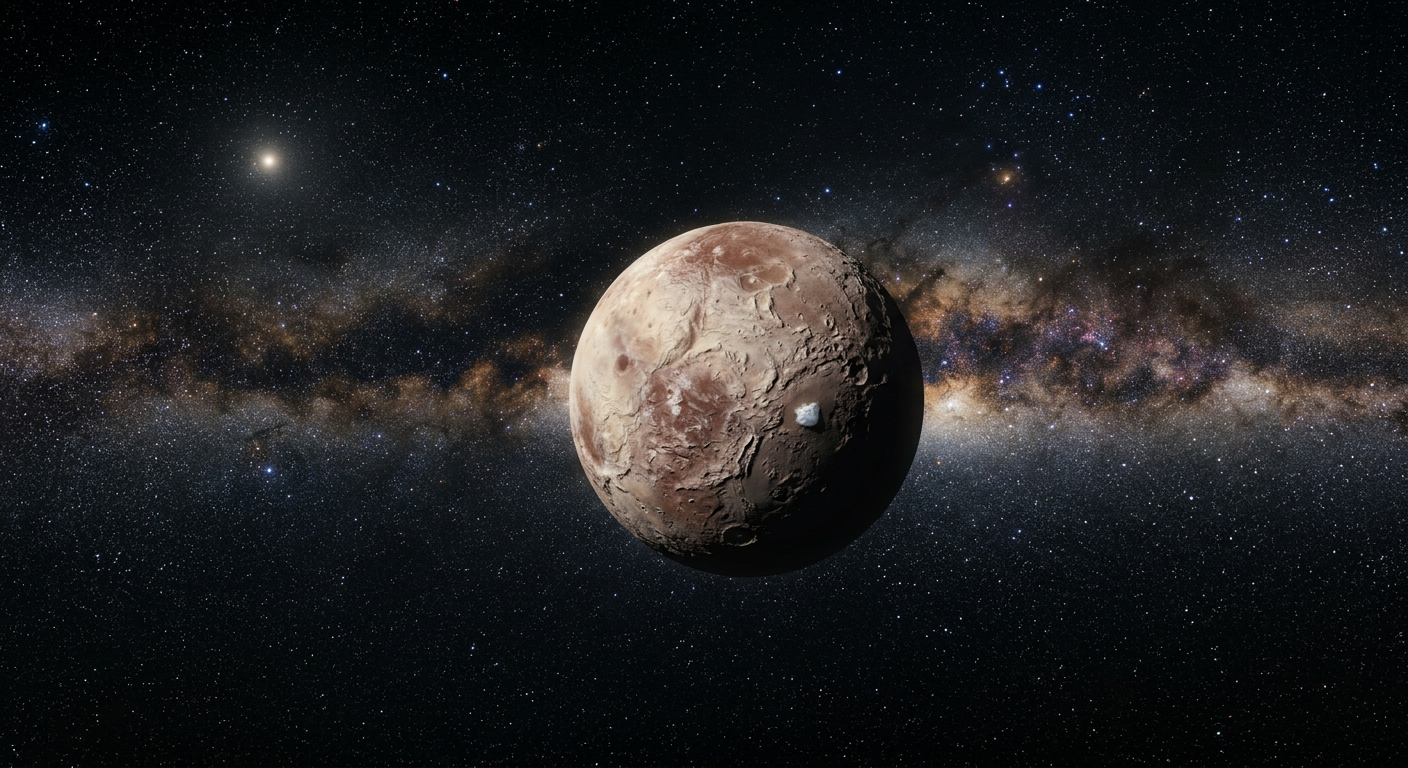
A large, icy world hiding in front of the Milky Way, far beyond Neptune. It could become only the sixth recognised dwarf planet in our Solar System.
At a glance
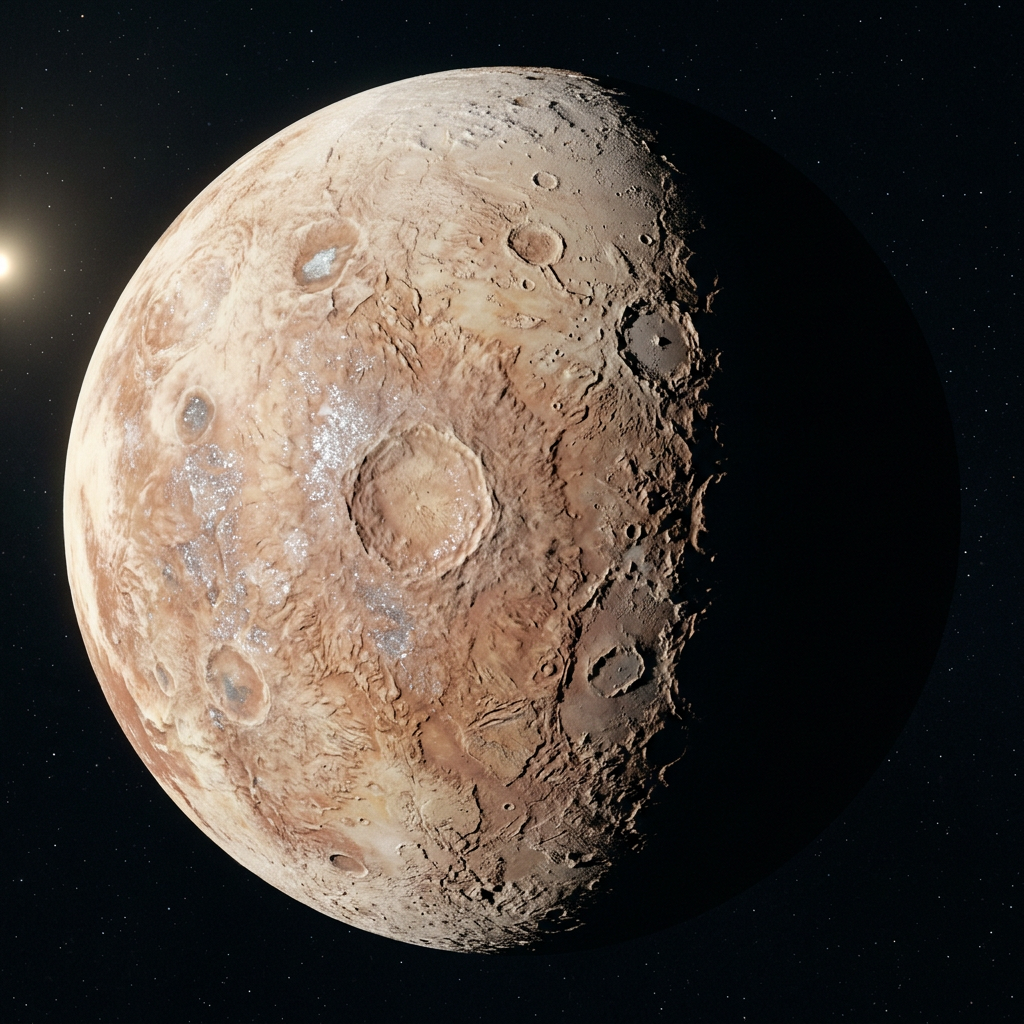
The object
2026 ED138 orbits in the Kuiper Belt, the icy ring of leftover building blocks beyond Neptune that is also home to Pluto. Its path is slightly oval and tilted by almost 25 degrees.
Astronomers call it a "hot" classical object. "Hot" describes its stirred-up orbit, not its temperature. Long ago, as the giant planets shifted, bodies like this were flung outward and tipped onto steeper paths.
Its brightness is measured, but not how reflective its surface is. A dark surface means a big world, up to 1,500 km. A bright, icy surface means a smaller one, nearer 600 km.
Where it is
Drawn to scale from its published orbit. The glowing dot shows roughly where it is today, about 47.2 times farther from the Sun than Earth and heading slowly outward.
Size
The shaded ring shows ED138's possible size range. At its largest, it would rival Makemake and Haumea.
Discovery
It is bright for something so far away. It went unseen because it sits in front of one of the most crowded star fields of the Milky Way.
Older telescope images already contained the faint dot. It was only spotted in them after the discovery.
The Vera C. Rubin Observatory in Chile, with the largest digital camera ever built, begins surveying the southern sky.
Rubin photographs the crowded Milky Way field where the object hides. Its provisional name records this half-month.
Search software by Holman and Kevin Napier finds the slow-moving object hidden among the stars.
With 16 years of observations, its orbit is pinned down. It may be the sixth recognised dwarf planet.
It last swung closest to the Sun in April 1926. It will not do so again for almost two centuries.
Verdict pending
The International Astronomical Union uses four tests. Here is where 2026 ED138 stands today.
Yes. It follows its own 283-year path around the Sun.
Yes. It travels independently through the Kuiper Belt.
Not confirmed yet. It needs a firm size and mass. Telescopes such as JWST and ALMA will help.
No. It shares its region with countless other icy bodies, which is why it would be a dwarf planet, not a full planet.

Find 2026 ED138 among the Kuiper Belt dwarf planets on the live map and compare its path with Pluto's.
Open the live map